



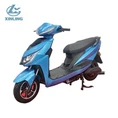


(1) Steering: The front wheel cooperates with the handlebar to control the driving direction of the motorcycle. The handlebar is installed on the upper link plate. When the handlebar rotates around the steering column, the upper and lower link plates rotate accordingly, and the front wheel is driven to rotate left and right through the front shock absorber. The right end of the handlebar is equipped with a throttle handle that controls the opening of the carburetor throttle valve and a brake handle that controls the front wheel brake; the left end is equipped with a grip and handle that controls the clutch. There are also rear-view mirrors and various electrical switches on the left and right ends of the handlebar. The handle and brake handle control the front wheel brake, clutch and carburetor through steel cable. Wire ropes have different specifications. Brake and clutch use 1×19 outer diameter ∮2~∮2.5mm single-strand wire rope, and carburetor uses 1×7 outer diameter∮1.2~∮1.5mm single-strand wire rope.
(2) Braking: Generally, the front wheel braking is controlled by the hand-pinch brake handle, and the rear wheel braking is completed by stepping on the brake pedal. There are two types of braking devices for motorcycles: mechanical drum brakes and hydraulic disc brakes. The structure of drum brakes is similar to that of automobiles and tractors. The brake shoes are made of aluminum alloy die-casting, and the friction brake pads are glued on them. The brake cam is rotated by the brake arm and the brake shoes are pushed away to achieve the purpose of braking.
The brake is composed of oil tank, plunger valve oil pump (both on the handlebar), hydraulic oil pipe, brake caliper, brake disc, etc. The brake stagger is fixed with the front fork guide and is a fixed part of the brake device. The brake disc is fixed to the wheel and rotates with the wheel. When braking, hold the brake handle tightly, the plunger valve moves, and pushes the hydraulic oil along the hydraulic oil pipe into the two cylinders of the brake caliper. Under the action of the pressure oil, the oil cylinder pushes the friction plate to clamp the brake disc from both sides, which produces a large frictional resistance and forces the wheel to stop rotating. When the brake handle is released, the pressure in the hydraulic oil circuit drops rapidly, and the oil cylinder drives the friction plate to return to its original position, releasing the brake.